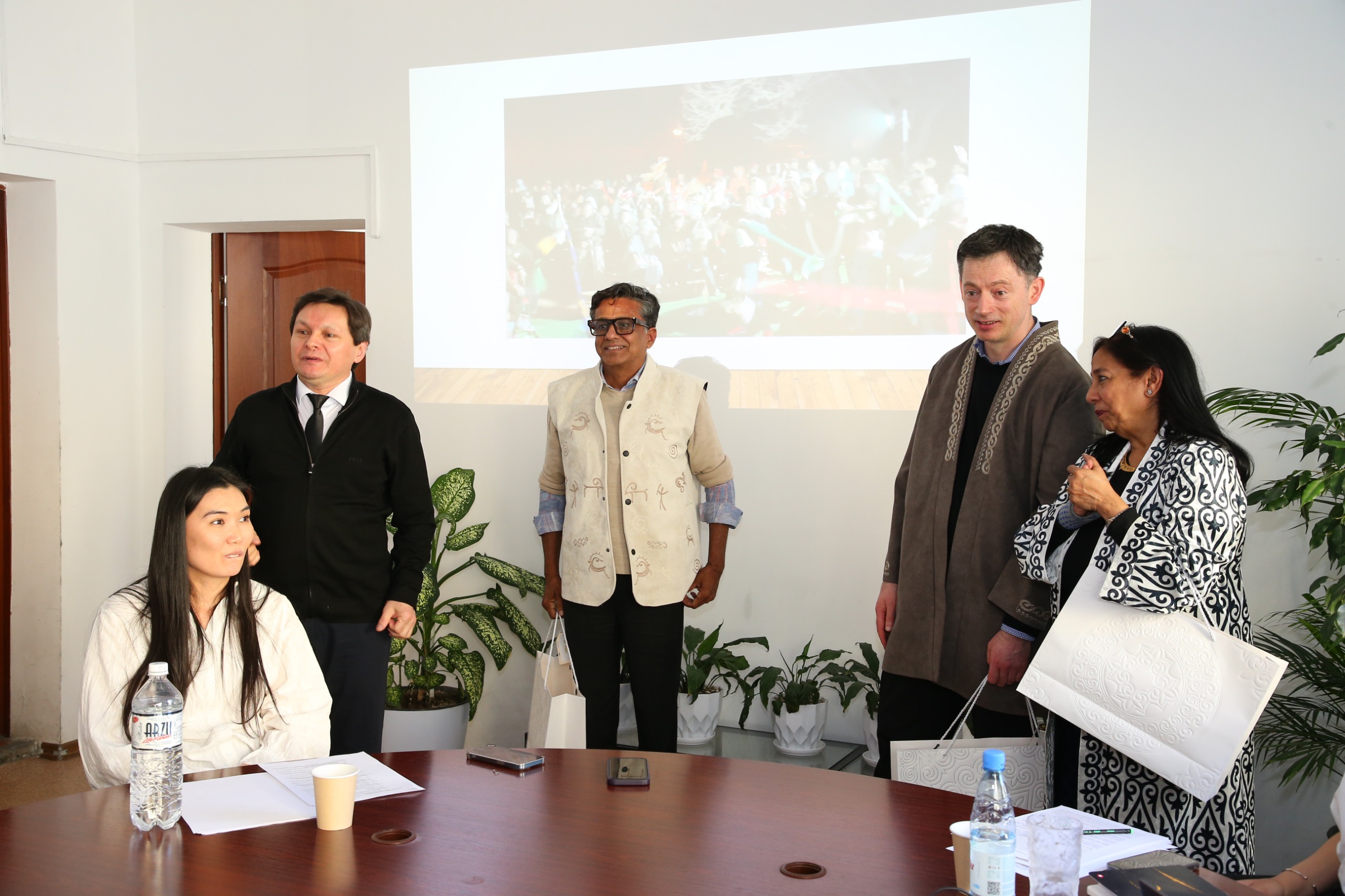
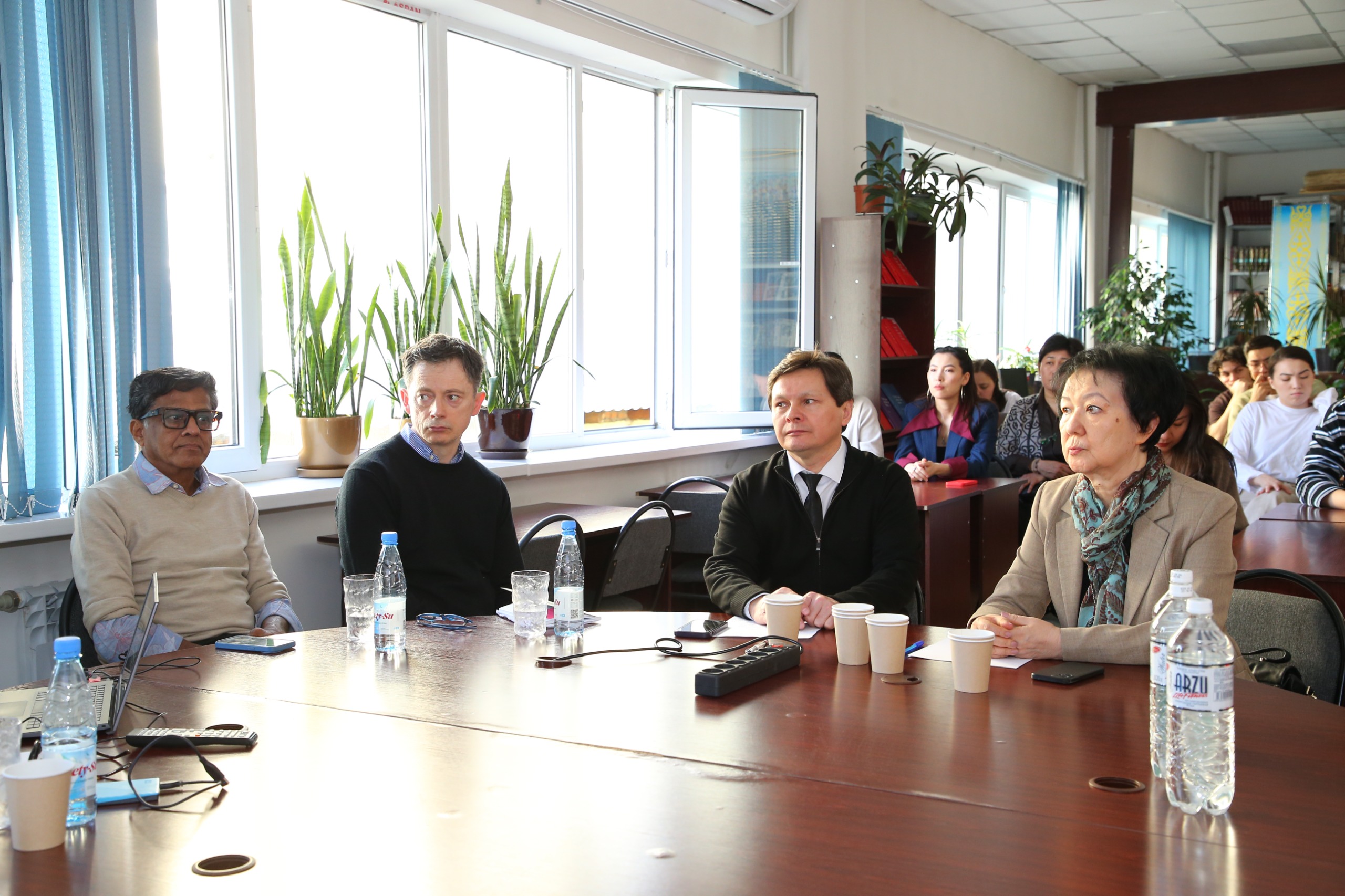
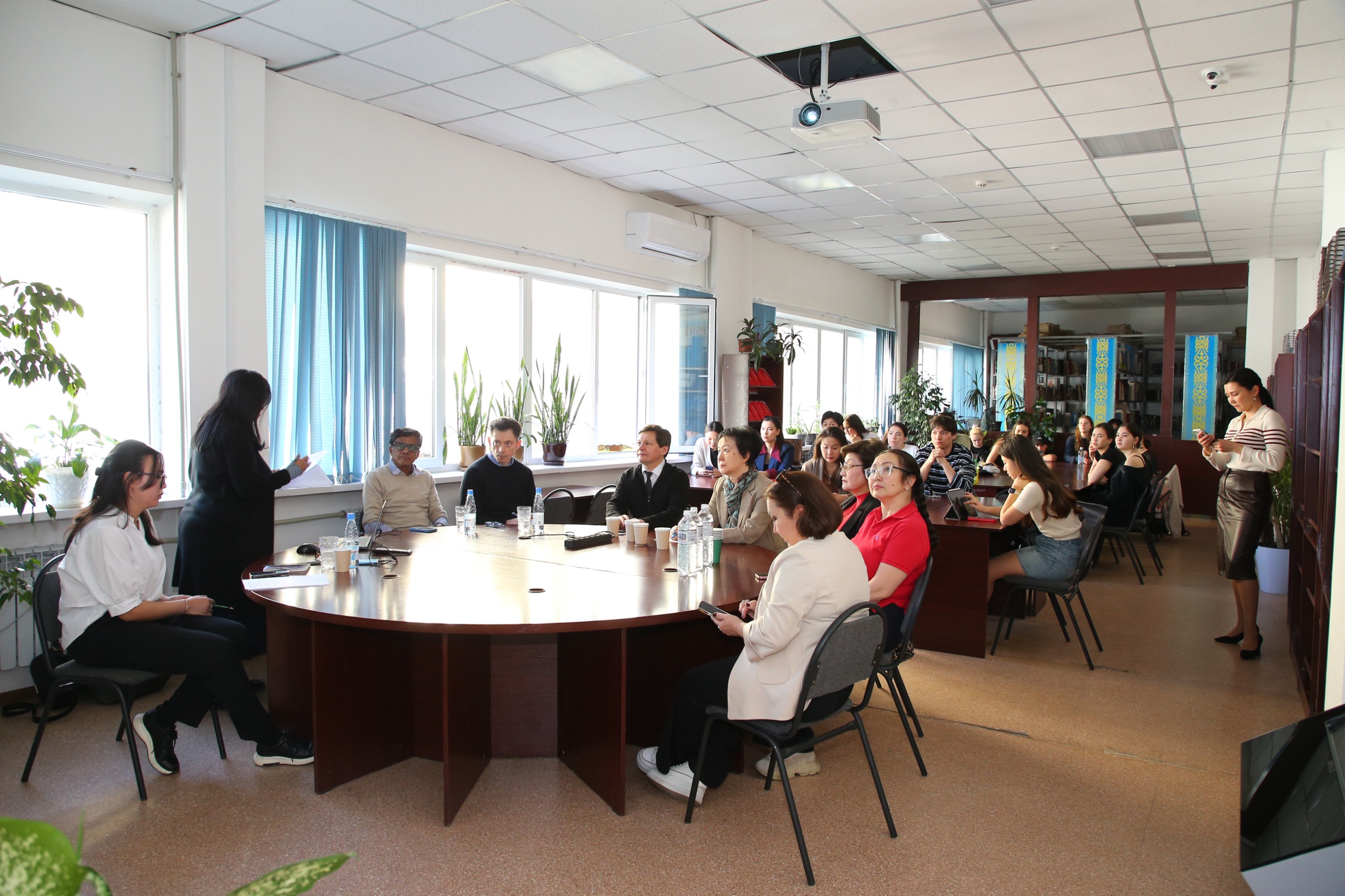
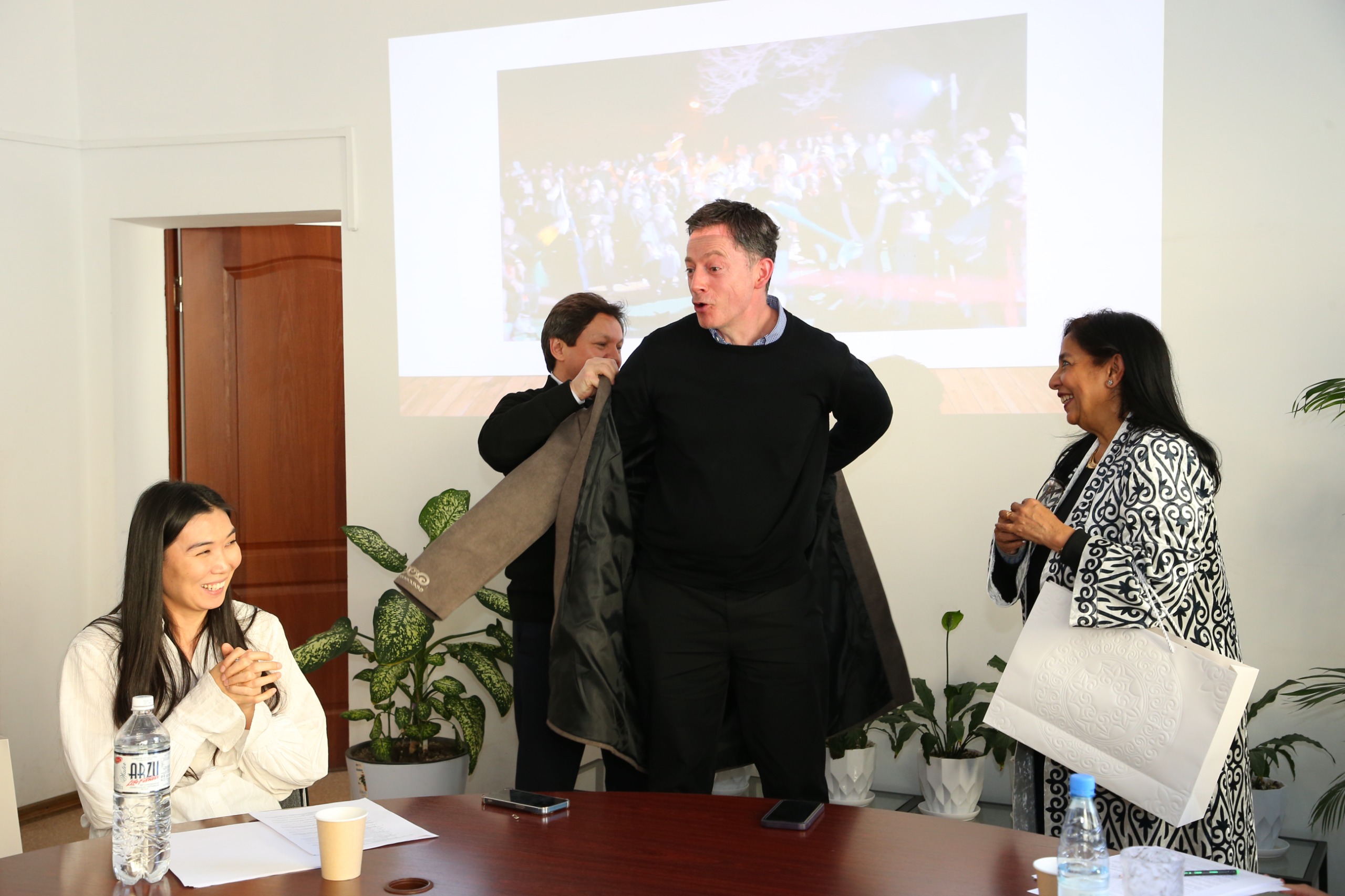
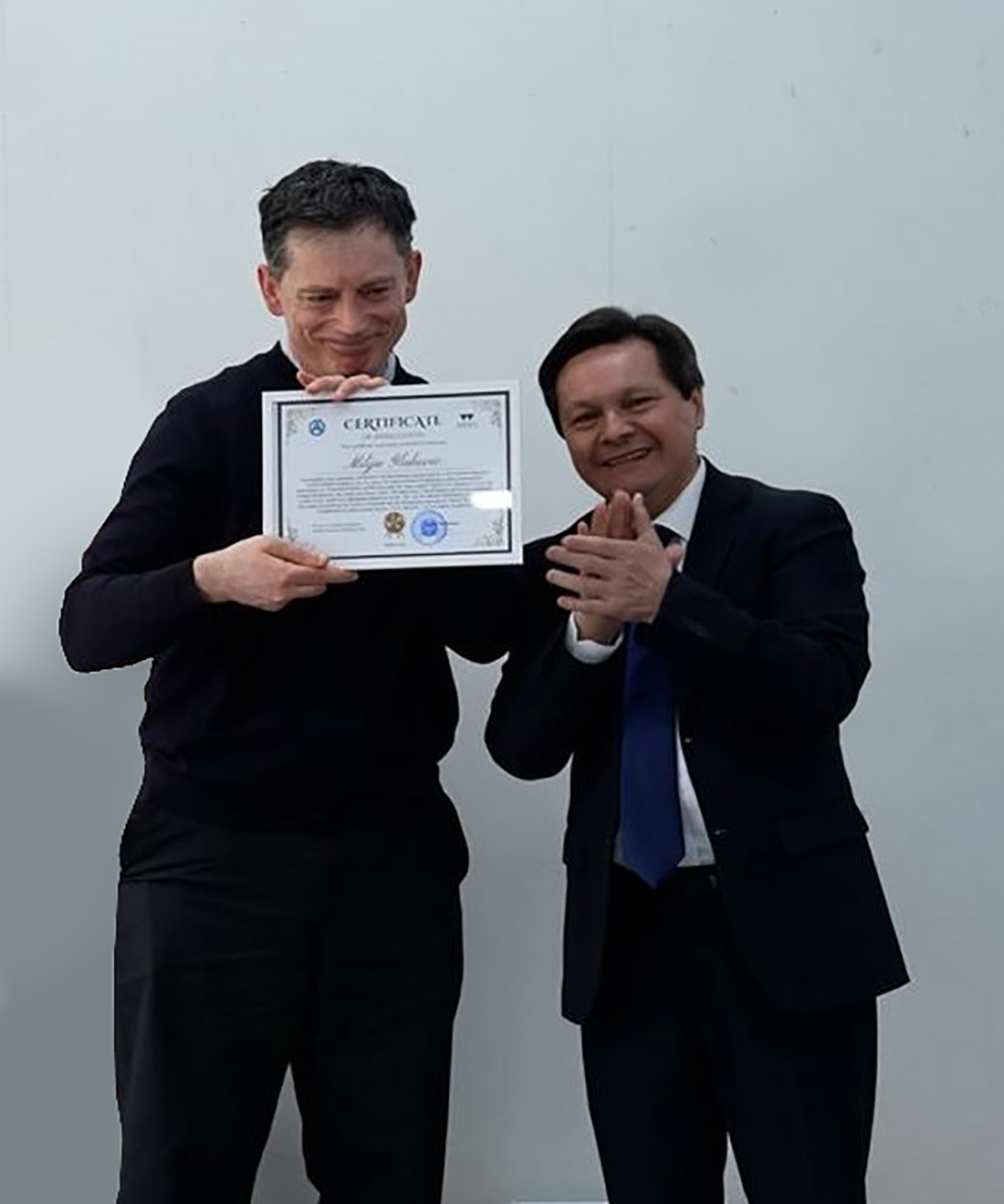
On March 27–28, 2026, lectures and master classes were held at the Academy cinema hall by Milija Gluhovic, PhD, Professor and Head of the Department of Creative Arts, Performance and Visual Cultures at University of Warwick (UK).
Masterclass topics:
- “Theatre Dramaturgy and Repertoire Policy: Staging Collective Memory”
- “Performative Identity: Theatre as a European and Global Zone of Connection”
The event was attended by faculty members, as well as MA and PhD students. The lectures were translated by Assem Abenova, a third-year PhD candidate and lecturer at the Department of Stage Speech, for whom Milija Gluhovic serves as an international academic supervisor.
The lectures were followed by an active discussion involving both the audience and the speaker. Participants exchanged views and presented scholarly reflections. The second part of the lecture, closely related to the historical past of Kazakhstan, generated particular interest.
The lecture by Milija Gluhovic focused on the analysis of decolonial aesthetics in post-Soviet art through the works of contemporary artists Aslan Gaisumov and Almagul Menlibayeva. The discussion centered on issues of historical memory, trauma, representation, and the reinterpretation of the Soviet past through artistic practices.
The first part examined the video work People of No Consequence (2016), посвящённое депортации чеченского и ингушского народов в 1944 году. Particular attention was paid to the concept of “embodied memory,” silence as a form of testimony, and the role of art in preserving traumatic experience.
The second part analyzed the installation The Tongue and Hunger: Stalin’s Silk Road (2023), addressing the tragedy of the famine of 1932–1933 in Kazakhstan. The lecturer emphasized the importance of artistic engagement with collective memory, as well as issues of ethnic identity, loss, and demographic transformations caused by Soviet policies.
Overall, the lecture highlighted the interconnection between art, politics, and historical memory, demonstrating how contemporary artists reinterpret colonial legacies through visual practices and create new forms of cultural expression.